Stretch & MobilityHow-to
Hamstring Stretch Lying Down, Seated or Standing
Living Room Strength ·
About this illustration
Illustration by Living Room Strength: a generated marker drawing of a room, not a photograph and not a guide to any move. It shows no people. Reuse it with credit to Living Room Strength; this site claims rights in it only as far as the law grants them.Answer first
Pick one of three positions (lying, seated or standing) and stretch the back of the thigh with that leg straight. Move in slowly until it feels tight, keep the Position lines below, and hold. The sources give different hold times; this page shows all three and the one the Floor Card uses.
Floor Card
- Space
- Mat
- Noise
- Quiet
- Kit
- None
- Version today
- Lying, seated or standing hamstring stretch
- Sets × seconds
- 1 × 20 per side
- Rest
- No clear source
- Spare-Two Check
- Not used here
- Easier
- Not used here
- Harder
- Not used here
- Stop for today if
- “Stop the exercise immediately if you feel any pain or become unwell.” If the pain does not go away, see a doctor.The quoted sentence: Information from the NHS website, as at 261126 (NHS). Seeing a doctor if the pain stays: Living Room Strength rule.
- End the set if
- You can no longer keep one of the position lines. That rep or hold ends there.Going on only while the move meets its standard: Adapted from ATP 7-22.02, p. 13-7 (ATP 7-22.02).
Position lines
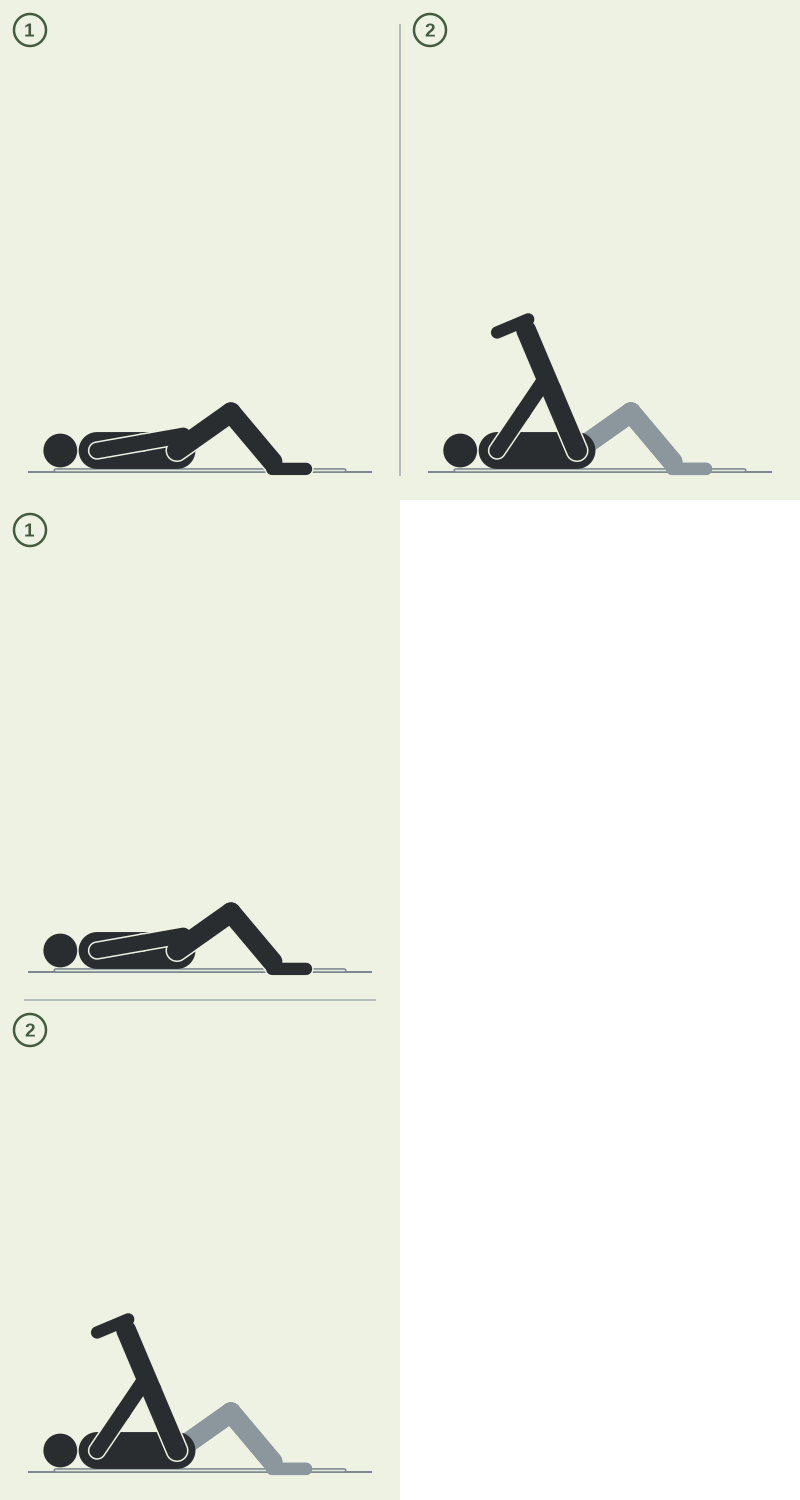
- Lying, quoted from the NHS: "Keeping your left leg bent with your foot on the floor, pull your right leg towards you keeping it straight." [2]
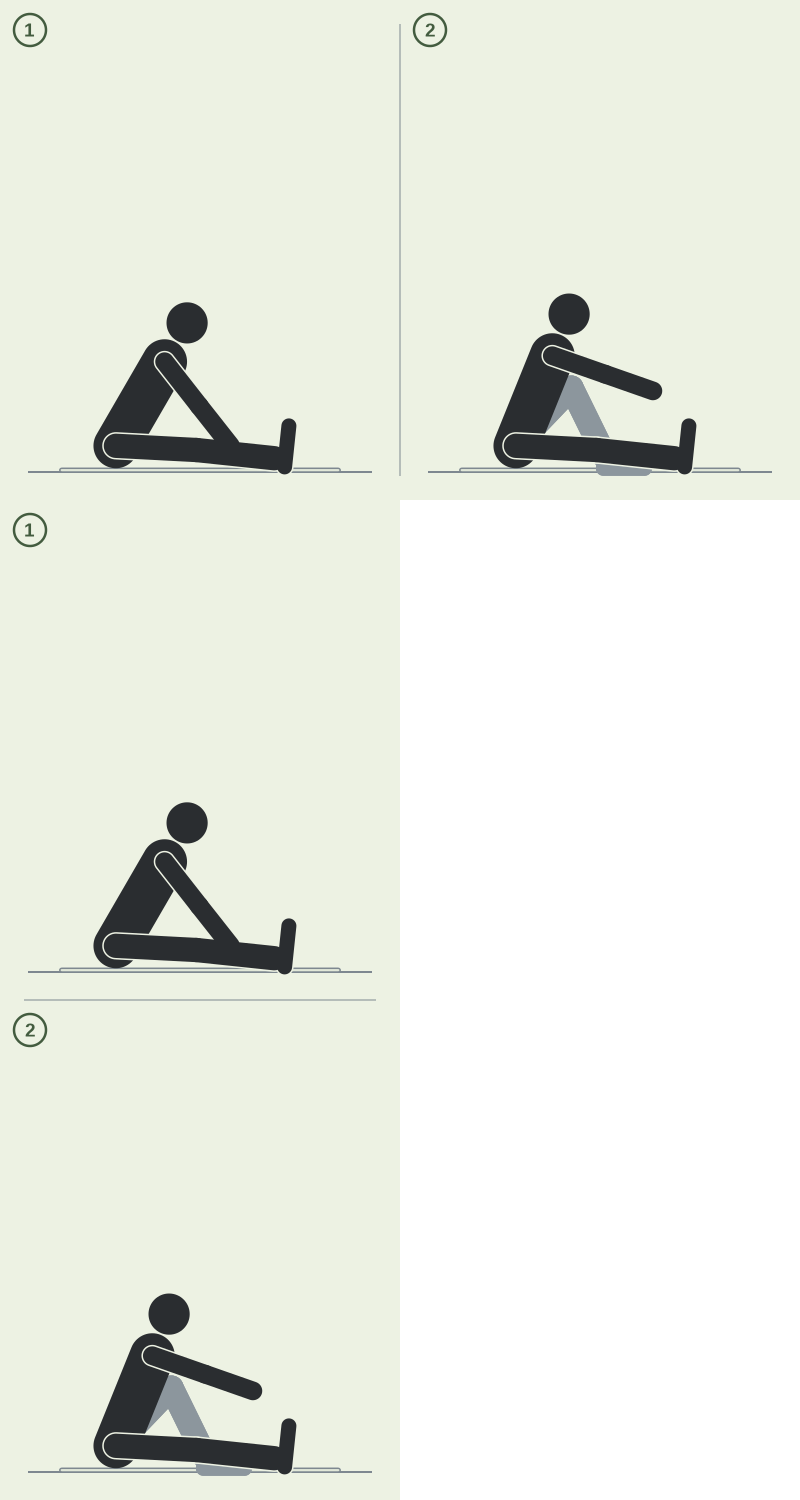
- Seated: your knees stay straight, without locking, as you reach toward your feet [1].
- Seated on one leg: one knee is bent, the other leg stays straight, and you reach toward the foot of the straight leg [1].
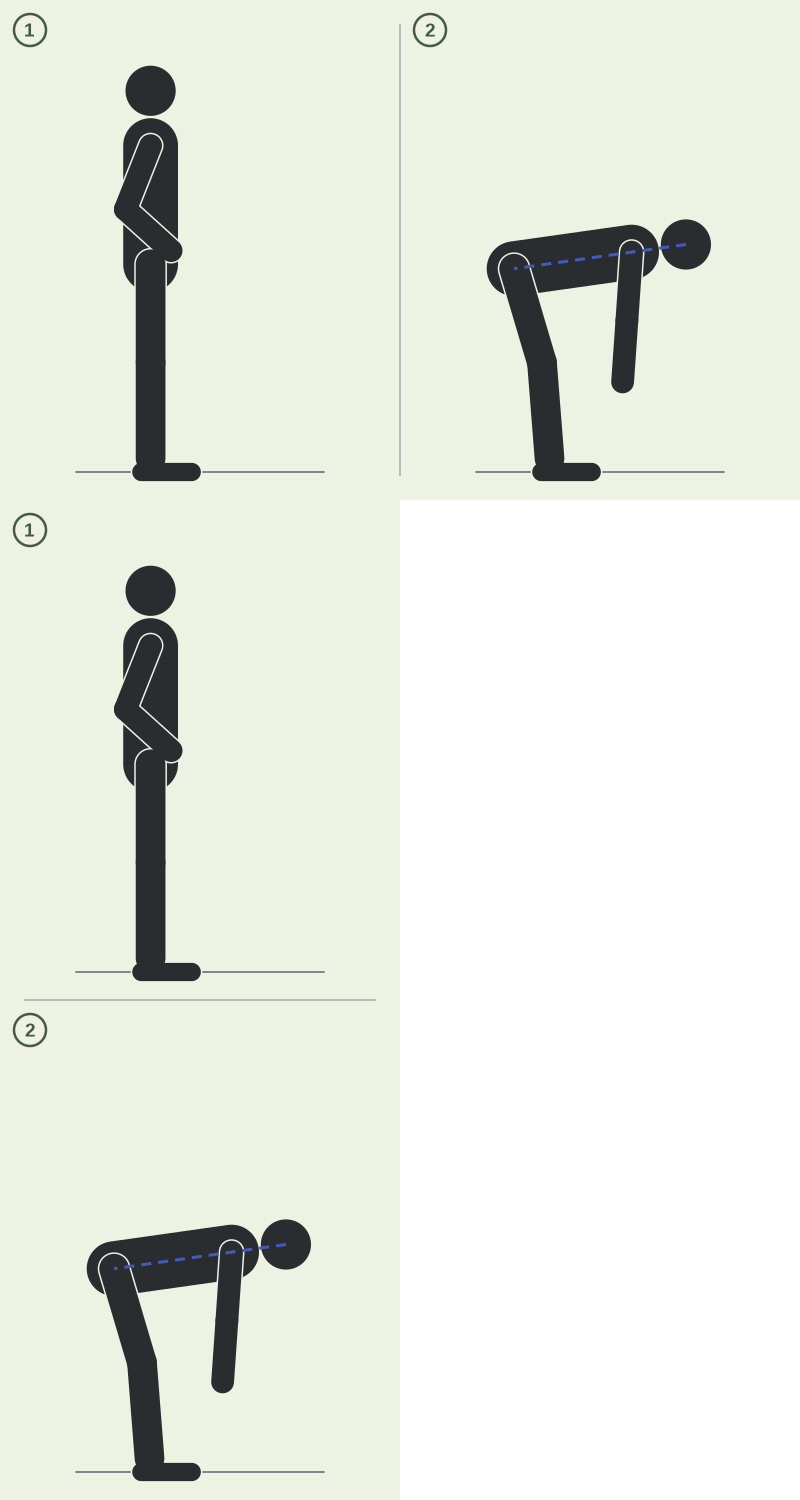
- Standing: your knees stay slightly bent, and your head stays in line with a straight spine as you bend forward at the waist [1].
- All three: you stop going deeper at the point of tightness or mild discomfort [3], and you never stretch so far that it hurts [4].
You can film one set from the side on your phone and check each line. The video stays on your phone; this site never sees it.
The quoted line is Information from the NHS website, as at 261126 (https://www.nhs.uk/live-well/exercise/how-to-stretch-after-exercising/) [2].
The three positions are three ways into one stretch, not easier and harder versions of it. Pick the one that fits your floor and your day.
Each position has one source. The NHS describes the lying stretch [2]. The Army's fitness manual, ATP 7-22.02, describes the seated and standing ones [1]. The last line applies to all three and comes from two more sources [3][4].
How do you do the lying hamstring stretch?
The NHS writes it in four steps:
- "Lie on your back and raise your right leg."
- "Hold your right leg with both hands, below your knee."
- "Keeping your left leg bent with your foot on the floor, pull your right leg towards you keeping it straight."
- "Repeat with the opposite leg."
Information from the NHS website, as at 261126 (https://www.nhs.uk/live-well/exercise/how-to-stretch-after-exercising/) [2].
Raise the leg only as high as lets you hold it below the knee while it stays straight (panel 2). That height check is a Living Room Strength rule. If the knee starts to bend, lower the leg a little.
How do you do the seated hamstring stretch?
Start sitting on the mat. ATP 7-22.02 builds the sitting position from half-kneeling, then says: "Straighten both legs so that they are placed together on the ground" (para 2-12, p. 2-4) [1].
From there, the manual's Hamstring Stretch has you reach forward with both hands toward your feet and hold your feet, your ankles or your lower legs (para 16-10, p. 16-6) [1]. Your knees stay straight but not locked (panel 1).
The manual also has a one-leg version (para 16-21, p. 16-13) [1]. Bend one knee and keep the other leg straight, then reach toward the foot of the straight leg until you feel the stretch in the back of that thigh (panel 2). Switch sides.
How do you do the standing hamstring stretch?
Stand with your feet shoulder-width apart and pointing ahead, hands on your hips (panel 1). In ATP 7-22.02 this stretch is one count of a moving drill, the Squat Bender: "with the knees slightly bent, bend forward at the waist. Maintain the head in alignment with the spine and keep the spine straight. Reach toward the ground until a stretch is felt in the back of the thighs" (para 3-8, p. 3-5) [1].
The manual then returns to standing and repeats the drill 5 to 10 times [1]. It does not hold the position. Stopping at the bottom and timing the hold is a Living Room Strength rule (panel 2). The hold time comes from the next section, not from the manual.
To come up, bring your hands back to your hips and return to standing at the same slow pace [1].
How long do you hold each side?
Three sources, three answers:
- The NHS lists its lying hamstring stretch as "hold for 15 to 20 seconds". Information from the NHS website, as at 261126 (https://www.nhs.uk/live-well/exercise/how-to-stretch-after-exercising/) [2].
- ATP 7-22.02 holds its two seated hamstring stretches for 20 to 30 seconds (paras 16-10 and 16-21) [1].
- An open college textbook says to stretch for at least 10 seconds for very tight muscles, work toward 30 to 90 seconds, and do each stretch two to four times [3].
Only the textbook's advice is general; the NHS and ATP times belong to their own stretches. Twenty seconds falls inside all three ranges. The Floor Card's one 20-second hold on each side is a Living Room Strength rule, picked from that overlap.
In the seated stretch with both legs out, both legs are straight at the same time, so this site counts it as one hold (also a Living Room Strength rule). A workout timer can count the seconds for you.
Do you need to touch your toes?
No. In the manual's seated stretch you hold whatever you reach: feet, ankles or lower legs [1]. In the standing one you reach toward the ground [1]. This page does not say when, or whether, your hands will reach your toes.
Go slowly and stay in control [3]. Move in until the back of the thigh feels tight, or mildly uncomfortable, and hold still there [3]. Don't stretch so far that it hurts (adapted from the National Institute on Aging, NIH) [4].
Keep breathing while you hold (adapted from the National Institute on Aging, NIH) [4]. If a Position line slips, such as the straight knee bending in the seated stretch or a rounded back in the standing one, end that hold.
How often, and before or after a workout?
The textbook suggests stretching at least 2 to 3 days a week, and 5 to 7 if you can [3]. The National Institute on Aging suggests stretching once your muscles are warm, after strength or endurance work (adapted from the National Institute on Aging, NIH) [4]. Sources differ on stretching before a workout, and Static vs Dynamic Stretching: Where Each Fits sets them side by side.
About this illustration
Illustration by Living Room Strength: a generated marker drawing of a room, not a photograph and not a guide to any move. It shows no people. Reuse it with credit to Living Room Strength; this site claims rights in it only as far as the law grants them.The U.S. Physical Activity Guidelines call stretching an appropriate part of an exercise plan, even though its health benefits are unknown (p. 61) [5]. Time spent stretching does not count toward the guidelines for aerobic or strength work (p. 61) [5]. For those, start with a warm-up and a strength session.
The standing stretch looks like the start of a Romanian Deadlift With Dumbbells, Hip Hinge First, but that page moves for reps instead of holding. For the front of the hip and thigh, see Hip Flexor Stretch: Kneeling, Standing or Lying Down. To fit this stretch into a longer set of stretches, see Full-Body Stretching Routine: Five Standing, Five on the Mat. Short on floor? Small-Space Workout Finder: Match Space, Noise and Equipment lists moves by the space they need.
Next session: try the position you skipped today, read its Position line before you start, and time one hold on each side.
Source trail
- Lying hamstring stretch steps and a hold of 15 to 20 seconds (quoted) [2]
- Seated position with both legs straight; seated reach toward the feet, ankles or lower legs with the knees straight but not locked; one-leg seated version; standing forward bend with soft knees, head in line with a straight spine; holds of 20 to 30 seconds [1]
- Stretch to tightness or mild discomfort; at least 10 seconds, toward 30 to 90; two to four times; 2 to 3 days a week, ideally 5 to 7; slow and controlled [3]
- Never stretch so far that it hurts; keep breathing; stretch when warmed up, after strength or endurance work [4]
- Health benefits of stretching unknown; stretching time does not count toward the aerobic or muscle-strengthening guidelines [5]
Living Room Strength rule
- Raising the lying leg only as high as lets your hands hold below the knee with the leg straight; holding the standing forward bend as a timed stretch
- The Floor Card's one 20-second hold per side, chosen from where the three sources' times overlap; the two-leg seated stretch counting as one hold
Living Room Strength set these itself. No source gives them, so read them as this site’s choice, not a finding.
Sources
Numbers in brackets point here. Anything marked Living Room Strength rule is this site’s own choice and has no source.
- Headquarters, Department of the Army. ATP 7-22.02, Holistic Health and Fitness Drills and Exercises, Oct 2020 (incl. C1, Sept 2025) Open the source Read: Chapters 2, 3, 6, 13, 14, 16 and 17 (exercise descriptions only; photographs not used).
- NHS. How to stretch after exercising Open the source Read: Full page (page last reviewed 16 March 2026).
- Markell, Peterson and Johnson (Centralia College). Exercise and Nutrition, 5.5: Creating an Effective Stretching Program. Medicine LibreTexts Open the source Read: Section 5.5. License: CC BY 4.0.
- National Institute on Aging, NIH. Three Types of Exercise Can Improve Your Health and Physical Ability (content reviewed 2025) Open the source Read: Full article; general principles only.
- U.S. Department of Health and Human Services. Physical Activity Guidelines for Americans, 2nd edition (2018) Open the source Read: Full guidelines; Chapter 4 (pages 56-62) and Chapter 7 (pages 88-93) used.
Elsewhere in the room
Corrections
No corrections on this page yet. If a line, a number or a drawing here is wrong, tell this site.